
Fragile Goods Delivery: What Businesses Need to Know About Safe Transport
Fragile courier service
This blog explains the key considerations for businesses when sending delicate, valuable or easily damaged items. It covers the importance of suitable packaging, careful handling, reliable transportation, and choosing a courier service that understands the needs of fragile shipments.
The blog uses practical examples to show how damaged goods can affect customer satisfaction, business operations, delivery times and costs. It also provides a simple checklist businesses can use before dispatching fragile items and explains how dependable fragile goods delivery can contribute to a positive customer experience.
Fragile items can be damaged in a number of ways during transportation. Damage in transit can be caused by sudden movement, vibration, pressure from other items, temperature changes or incorrect stacking. For example, a company may need to send a set of handmade glass products to a customer. Even if the outer packaging appears undamaged on delivery, excessive movement inside the box can still result in cracks or breakages. This is why fragile goods delivery requires careful planning and handling from the moment an item is packed through to its arrival at the destination.
A standard parcel can usually withstand normal movement during transport. Fragile shipments require a more cautious approach. The first step is proper packaging. Strong outer packaging, protective cushioning, internal separators and secure wrapping can help prevent items from moving during transportation.
The size of the packaging is also important. If the box is too large, the item may move around during transit, while packaging that is too tight may place unnecessary pressure on delicate surfaces.
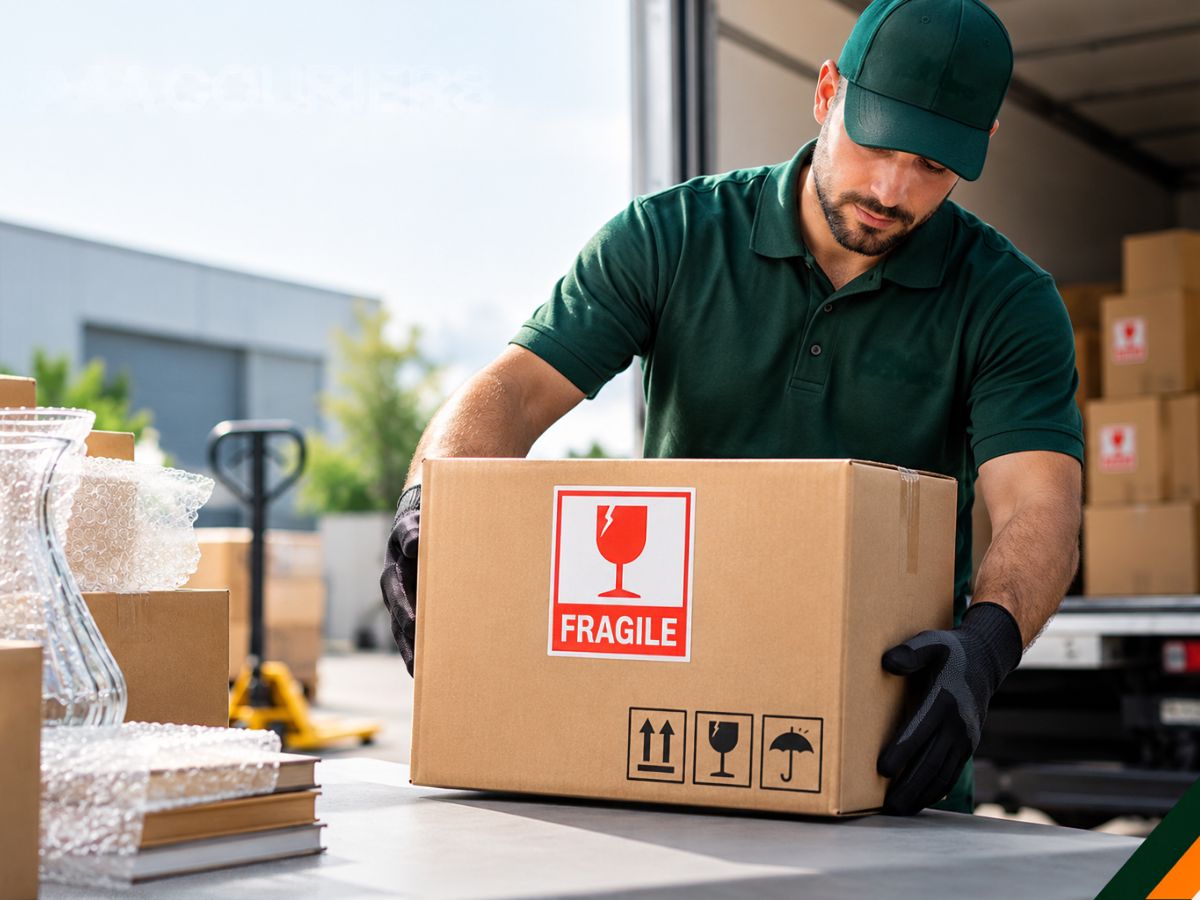
Clear handling instructions can also help couriers identify shipments that require extra care.
Good packaging is not simply about using more material. It is about creating suitable layers of protection around the item. For example, fragile electronic components may require anti-static protection, cushioning and a sturdy outer box, while ceramic items may need to be individually wrapped, separated internally and given additional protection around vulnerable edges.
Businesses should also consider testing their packaging before using it for regular shipments. A controlled test using a sample package can help identify potential weaknesses that may not be apparent while the item is simply sitting in a warehouse.
Some shipments represent more than just the item being transported. They may involve an important customer relationship, a business deadline or a valuable commercial opportunity.
For example, a retailer sending a high-value decorative item to a customer ahead of a special event could face more than just the cost of replacing the product if it arrives damaged. It could result in delays, additional customer service work and disappointment for the customer. Likewise, a manufacturer sending a fragile component to another business could experience production delays if the item arrives damaged. Reliable fragile goods delivery can therefore help support smoother operations and a better overall customer experience.
Packaging is important, but businesses should also consider what happens once an item leaves their premises. It is worth understanding how the courier handles fragile items, how they are transported and whether the service is suitable for the type of goods being sent. This is particularly important when items are high-value, delicate or easily damaged.
For businesses that regularly send fragile items, establishing a consistent delivery process can make a significant difference. Staff can follow the same packaging checks, labelling procedures and dispatch process for every shipment.
Before handing over a fragile item for delivery, check the following:
Taking a few extra minutes to carry out these checks before dispatch can help prevent avoidable problems later.
The right courier should understand the importance of careful handling when dealing with fragile deliveries. Businesses should consider the courier’s experience, delivery options, communication and approach to specialist shipments.
It is also worth considering whether the service can accommodate the frequency of your deliveries and the destinations you regularly send to. A solution that works for occasional local shipments may not be suitable for a business regularly sending fragile goods across the UK.
Customers may never see the packaging process or the journey their order takes, but they will remember the condition in which their item arrives.
An item that is well packed and handled professionally can reinforce confidence in a business. Repeated damage, however, can quickly become costly and have a negative impact on customer trust.
Reliable delivery is therefore more than simply a transport requirement. It plays an important role in protecting goods, meeting customer expectations and maintaining a professional service.
Delicate items require careful preparation before they are handed over for delivery. Suitable packaging, proper preparation and a reliable courier service can help businesses reduce unnecessary risks and ensure their goods are transported safely and securely. If your business regularly sends delicate, fragile or high-value items, take a look at the fragile goods delivery services available from AAA Couriers and find a delivery solution that meets your requirements